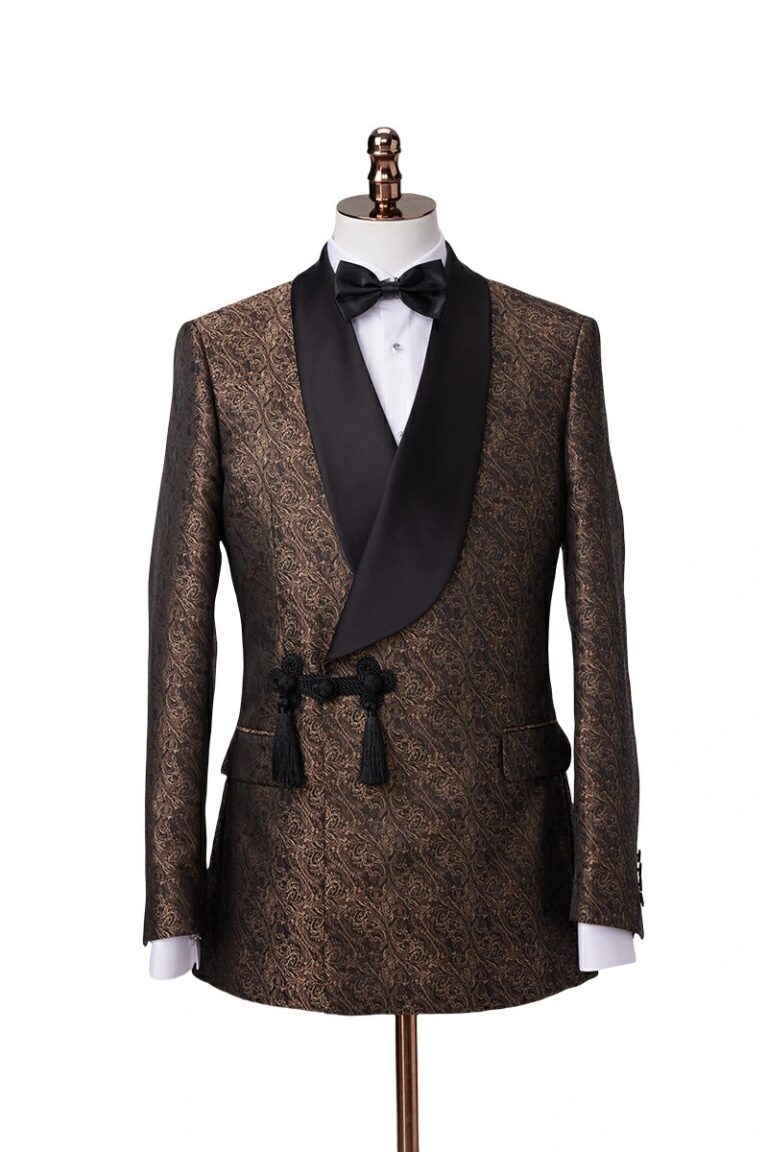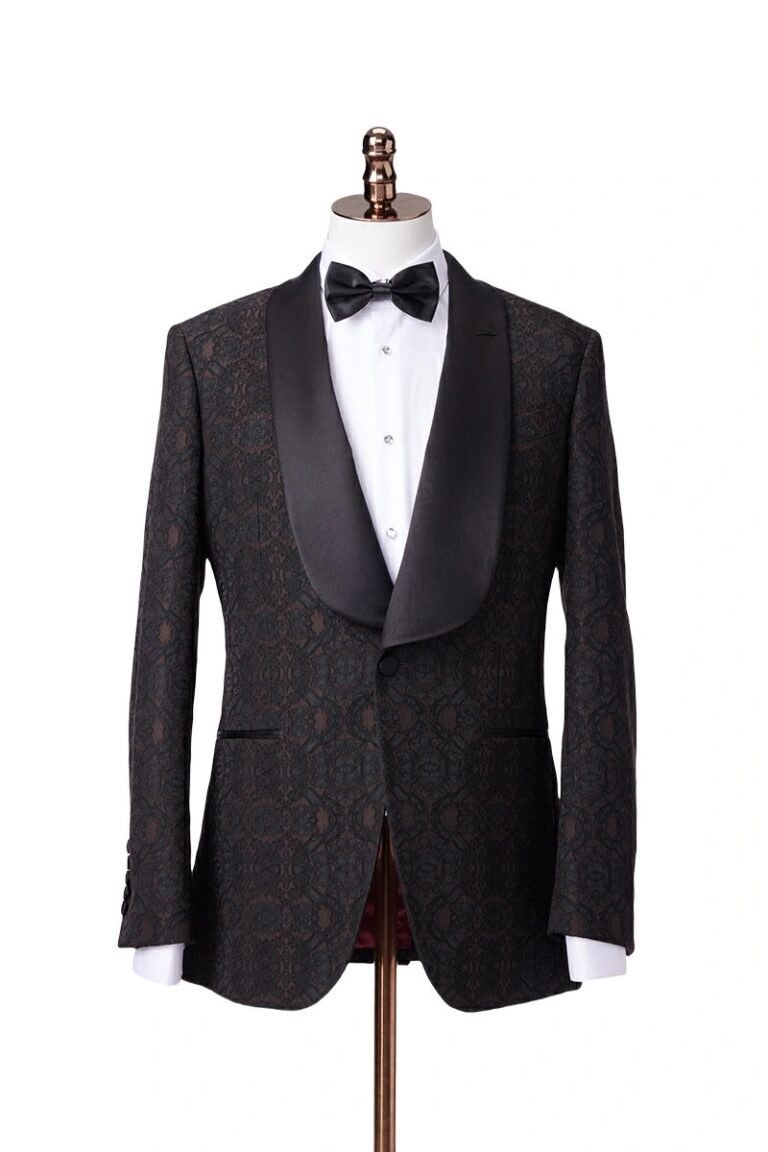
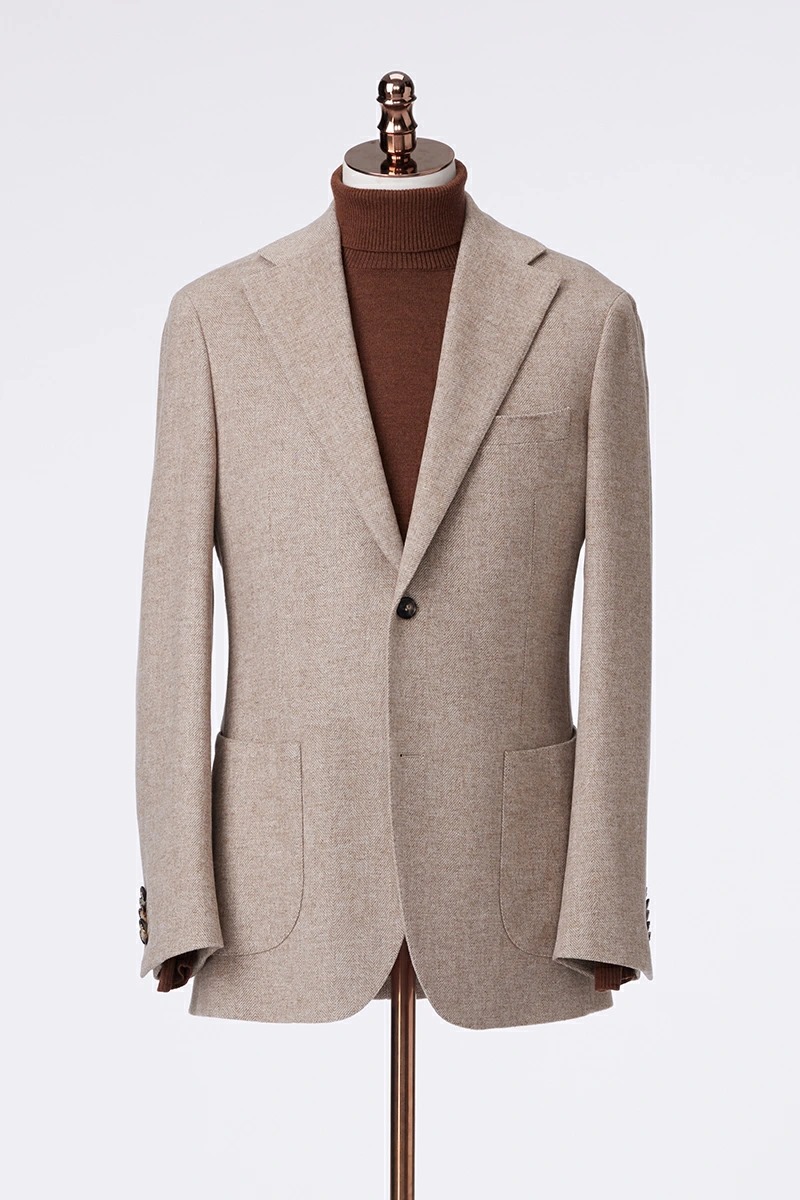
Made in Italy vs Made in USA Suits: What Actually Differs?
Italian and American suits differ mainly in three things: shoulder construction, jacket silhouette, and fabric weight. Italian suits use a soft, lightly padded shoulder and a trimmer, shorter jacket. American suits use a natural shoulder with a straighter, roomier body. Neither is objectively better the right one depends on your build, your climate, and how the suit is constructed inside.
That’s the short answer. The longer answer is more interesting, because most of what people believe about “Italian suits” and “American suits” is about style schools, not about countries and the label on the inside pocket often doesn’t tell you what you think it does.
At a glance: Italian vs American suits
| Feature | Made in Italy | Made in USA |
|---|---|---|
| Shoulder | Soft, minimal padding; often spalla camicia (shirt-style) | Natural shoulder, little to no padding, straight line |
| Silhouette | Trimmer waist, shorter jacket length | Straighter, boxier through the body |
| Armhole | Higher and smaller (more arm mobility) | Lower and roomier (more chest comfort) |
| Vents | Often side vents or ventless | Traditionally a single center vent |
| Lapel | Wider, with more roll; often peak on single-breasted | Moderate notch lapel |
| Fabric weight | Lighter (7–10 oz common) | Heavier historically (10–14 oz) |
| Typical fabrics | Loro Piana, Zegna, Vitale Barberis Canonico | Often Italian or British cloth, US-assembled |
| Best for | Slim to average builds, warm climates, softer look | Athletic, broader, or larger builds; four-season wear |
| Feel on the body | Light, close, expressive | Substantial, structured, forgiving |
What does “Made in Italy” actually mean on a suit label?
Less than most buyers assume. A country-of-origin label reflects where the garment was substantially assembled — not necessarily where the wool was woven, where the canvas was set, or where the buttonholes were sewn.
In practice, a suit sold as “Italian” usually falls into one of three categories:
- Italian fabric, made abroad. The cloth comes from an Italian mill; the jacket is cut and assembled elsewhere. This is by far the most common scenario at mid-market price points.
- Italian-assembled, mixed inputs. Assembled in Italy, but with components linings, canvas, buttons sourced internationally.
- Fully Italian. Italian cloth, Italian canvas, Italian workroom. This is genuinely rarer and priced accordingly.
What to do about it: don’t ask “Where was this made?” Ask three better questions instead Which mill wove the cloth? Is the jacket full canvas, half canvas, or fused? Who is taking my measurements and who does the alterations? Those three answers tell you far more about the suit you’ll actually wear.
What defines Italian suit construction?
Italy isn’t one tailoring tradition. It’s at least three, and they behave very differently on the body.
Neapolitan (Naples)
The softest tailoring in the world. Neapolitan jackets are built with almost no shoulder padding and a very light chest canvas, so the jacket moves like a heavy shirt. Hallmarks include the spalla camicia — a shirt-style shoulder where the sleeve is gathered into the armhole — plus patch pockets, a curved barchetta breast pocket, and a shorter jacket length.
Wear it if: you want comfort and drape, you live somewhere warm, and you don’t need the suit to build structure into your frame.
Milanese and Northern Italian
Cleaner and more structured than Neapolitan work. There’s real shoulder shape and a defined waist, but the whole garment stays lighter than British tailoring. This is the silhouette most people picture when they think “Italian suit” from brands like Zegna or Brioni.
Wear it if: you want a sharp, business-appropriate line without the weight of a Savile Row build.
Roman
The middle ground — some shoulder structure, a longer jacket than Neapolitan, and a softer waist suppression than Milanese. Quietly elegant rather than dramatic.
What defines American suit construction?
The American tradition is built around one idea: the natural shoulder. Rather than reshaping the wearer, the jacket follows the wearer’s actual shoulder line.
The archetype is the sack suit — the classic Ivy League cut popularized in the mid-20th century. Its defining traits:
- An undarted or lightly darted front, giving a straight, unshaped body
- A soft natural shoulder with minimal padding
- A single center vent
- A three-button front that rolls to the middle button (the “3-roll-2”)
- Generous room through the chest and seat
American tailoring also has a serious high end. Houses like Oxxford Clothes in Chicago and Hickey Freeman in Rochester built reputations on hand-canvassed, hand-finished construction that competes with anything from Naples or London — usually in heavier, more durable cloth.
Modern American custom tailoring has largely moved away from the boxy sack. Most contemporary US tailors — including us — cut a trimmer, more shaped garment that borrows Italian softness while keeping American room through the chest.
Which one fits your body better?
This is the question that actually matters. Country of origin is a proxy; body type is the real variable.
| Your build | Better starting point | Why |
|---|---|---|
| Slim, average height | Italian (Neapolitan or Milanese) | Trim silhouette and short jacket flatter a narrow frame |
| Athletic — broad chest, narrow waist | Italian cut with American chest room | High armhole for mobility, extra chest room for the V-taper |
| Broad or heavyset | American-influenced | Lower armhole, straighter body, less waist suppression is more comfortable and more flattering |
| Tall and lean | Italian | Shorter jacket length balances long legs; soft shoulder avoids a “hanger” look |
| Short stature | Italian, with a shortened jacket | Higher button stance and shorter jacket lengthen the leg line |
| Sloped or uneven shoulders | Either — but structured | Some padding is needed to correct the line; a fully soft Neapolitan shoulder will expose the asymmetry |
A good custom tailor doesn’t pick a country. They pick shoulder construction, armhole height, jacket length, and waist suppression independently — which is the entire point of going custom.
Where the fabric actually comes from
Here’s the part that resolves most of the debate: Italian mills supply the world.
Loro Piana, Ermenegildo Zegna, Vitale Barberis Canonico, Drago, and Carlo Barbera dominate the premium suiting market. A jacket cut and sewn in the United States is very often made from Italian cloth. A jacket sewn in Italy is almost always made from Italian cloth.
So “Italian fabric vs American fabric” isn’t really the choice on the table. The choice is between which Italian mill and which weight and weave — and those decisions affect your suit far more than the country stamped on the label.
At Executive Custom we work from house fabrics alongside Loro Piana and Zegna specifically because the mill is where fabric quality is genuinely determined. You can read more about how we select and cut fabric for custom suiting.
The thing that matters more than country: canvas construction
If you take one thing from this article, take this. The single biggest quality difference between two suits at the same price is how the chest is built not where.
| Construction | What it is | How it ages |
|---|---|---|
| Full canvas | A floating horsehair/wool canvas layer stitched between fabric and lining across the whole front | Molds to your chest over time; drapes better every year |
| Half canvas | Canvas through the chest and lapels; fused below | Good compromise; keeps lapel roll, costs less |
| Fused | Interlining glued to the fabric | Stiffer drape; glue can bubble or delaminate after repeated cleaning |
A fused suit made in Italy is a worse garment than a full-canvas suit made in the United States. Country tells you about style. Canvas tells you about quality. Ask about canvas.
For a deeper breakdown, see why custom suits cost more than off-the-rack.
What do Italian and American suits cost?
Price tracks construction and hand-work far more closely than it tracks geography. Typical market ranges:
| Tier | Typical range | What you’re getting |
|---|---|---|
| Entry made-to-measure | $500 – $900 | Half canvas or fused, Italian or house cloth, machine-finished |
| Quality made-to-measure | $900 – $2,000 | Half or full canvas, named Italian mill, some hand-finishing |
| Italian ready-to-wear designer | $1,500 – $4,000 | Full canvas, brand premium, off-the-rack fit |
| American hand-tailored (Oxxford, Hickey Freeman) | $2,500 – $6,000 | Full canvas, extensive hand-work, heavier cloth |
| Full bespoke (Naples, Savile Row, NYC) | $5,000 – $15,000+ | Hand-cut pattern, multiple fittings, all hand-finished |
Ranges are indicative of the 2026 US market and vary by mill, canvas, and hand-work.
Our own custom suit packages start at $775 including a custom-tailored suit, custom dress shirt, and silk tie with the fitting done at our Great Neck studio or at your home or office.
How to choose: five questions to ask any tailor
- Is the jacket full canvas, half canvas, or fused? If they can’t answer plainly, that’s your answer.
- Which mill wove this cloth, and what’s the weight? A named mill and an ounce weight signal a real supply chain.
- What shoulder construction do you recommend for my build? A good tailor will explain the trade-off rather than default to one house style.
- How many fittings are included, and are alterations covered? Fit is delivered at fitting, not at ordering.
- Who does the alterations, and where? Local, in-house alterations are worth more than any country label.
Getting an Italian-fabric suit tailored on Long Island
The practical answer for most men in New York isn’t Italy or America it’s Italian cloth, cut to an American frame, fitted by someone you can actually walk in and see.
Executive Custom has been tailoring for clients across Great Neck, Manhasset, Roslyn, Port Washington, and the Five Towns for nearly 25 years. We work from Italian mills including Loro Piana and Zegna, build to the shoulder and armhole that suit your body rather than a fixed house cut, and handle alterations in-house. We also offer at-home and at-office fittings across Nassau County and Queens for clients who’d rather not lose an afternoon.
If you’re deciding between a soft Italian shoulder and a structured American build, come in and try both on. Fifteen minutes in front of a mirror settles the question faster than any article.
Frequently asked questions
Are Italian suits better than American suits?
No. Italian and American suits reflect different tailoring traditions, not different quality tiers. Italian construction is softer and trimmer; American construction is straighter and roomier. Quality is determined by canvas construction, fabric mill, and fit — a full-canvas American suit outperforms a fused Italian one.
Does “Made in Italy” mean the fabric is Italian?
Not necessarily. A country-of-origin label refers to where the garment was assembled, not where the cloth was woven. Many suits use Italian fabric assembled elsewhere, and some Italian-assembled suits use imported components. Ask which mill wove the cloth rather than relying on the label.
What is a Neapolitan suit?
A Neapolitan suit is an Italian jacket built with almost no shoulder padding and a very light chest canvas, giving it a soft, shirt-like drape. Signature details include the spalla camicia shoulder, patch pockets, a curved breast pocket, and a shorter jacket length than British or American cuts.
What is an American sack suit?
The sack suit is the classic American cut: a natural shoulder, an undarted straight-hanging body, a single center vent, and often a three-button front rolling to the middle button. It was the standard Ivy League silhouette and prioritizes comfort and room over waist shaping.
Which suit style is best for an athletic build?
An athletic build usually does best with a hybrid: an Italian-influenced high armhole for shoulder mobility and waist suppression for the V-taper, combined with American-style chest room. Off-the-rack rarely delivers this, which is why athletic builds benefit most from made-to-measure or bespoke.
Are Italian suits too small for American men?
Italian ready-to-wear often runs trim through the chest, shoulder, and thigh, which can fit poorly on broader American builds. This is a sizing issue, not a construction flaw. Custom Italian-style tailoring solves it by keeping the soft shoulder while adding chest and seat room.
Is full canvas worth the extra cost?
For a suit you’ll wear regularly for five or more years, yes. Full canvas molds to your chest over time, produces a better lapel roll, and won’t bubble the way fused interlining can after repeated cleaning. For an occasional-wear suit, half canvas is usually the better value.
Where can I get a custom Italian-fabric suit in New York?
Executive Custom offers custom suiting in Italian cloth from Loro Piana, Zegna, and house mills, with fittings at our Great Neck studio or at your home or office across Nassau County and Queens. Suits start at $775 including a custom shirt and silk tie.
Related reading
- Bespoke vs Made-to-Measure Suits: What’s the Difference?
- Why Are Custom Suits More Expensive Than Off-the-Rack?
- How Much Does a Custom Suit Cost in 2026?
- Sport Coat vs Blazer vs Suit Jacket: What’s the Difference?
- Custom Suiting Services
- Best Custom Tailor in Great Neck
Executive Custom is a custom clothing studio at 10 Bond St, Suite 8, Great Neck, NY 11021, serving Nassau County, Queens, and the North Shore with in-studio and at-home fittings.