
Suit Lapel Styles Explained Notch, Peak, and Shawl
Quick answer: There are three main suit lapel styles. The notch lapel has a small V-shaped cut where the collar meets the lapel and is the most versatile choice for business suits, blazers, and everyday wear. The peak lapel has edges that point upward toward the shoulders, creating a more formal, confident look that suits double-breasted jackets, weddings, and tuxedos. The shawl lapel is a smooth, continuous curve with no notch or peak and is reserved almost entirely for tuxedos and dinner jackets. For a first custom suit, a notch lapel is the safest choice. For formal events or a bolder statement, choose a peak. For black tie, choose a peak or shawl.
The lapel is the first detail people notice on a jacket. It frames your face, shapes how broad your chest and shoulders appear, and signals how formal your outfit is before anyone looks at the fabric or the fit. Choosing the wrong lapel can make an expensive suit look out of place, while the right one makes even a simple navy suit look deliberate and polished.
This guide explains each lapel style in detail, compares them side by side, and shows you how to pick the right lapel for your occasion, body type, and wardrobe. If you are planning a new jacket, our custom suits page explains how every detail, lapel included, is designed around you.
What Is a Suit Lapel?
A lapel is the folded flap of fabric on the front of a jacket that runs from the collar down to the top button. It is created by folding back the front edge of the jacket, and it is joined to the collar at a seam called the gorge. The shape of the lapel at that junction, along with its width and how high the gorge sits, defines the lapel style.
Lapels trace back to the high, buttoned collars of 18th and 19th century coats, which men began folding open for comfort. Over time the folded-back fabric became a design feature in its own right, and the three main styles we know today settled into place by the early 20th century. The Victoria and Albert Museum and The Metropolitan Museum of Art both hold historic menswear collections that show how jacket lapels evolved.
The Notch Lapel
What Is a Notch Lapel?
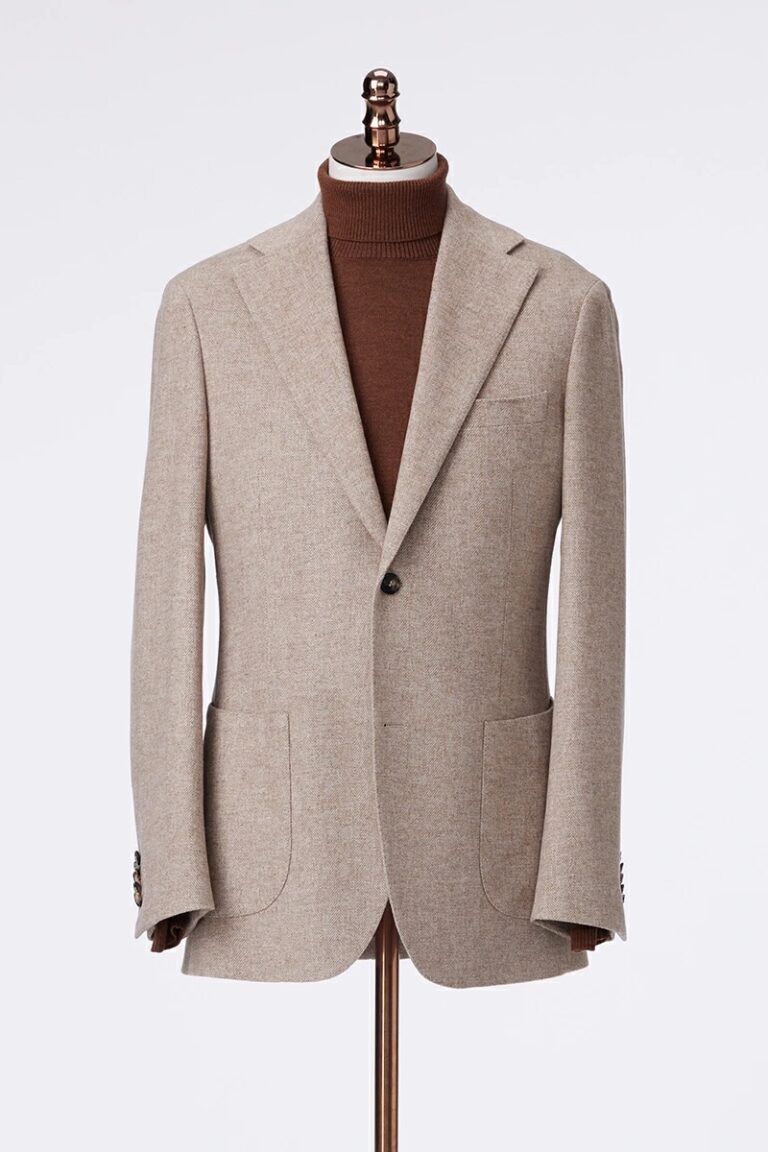
A notch lapel has a small triangular cut, or notch, where the bottom of the collar meets the top of the lapel. The notch usually sits at around a 75 to 90 degree angle, creating a clean step in the outline of the jacket. It is by far the most common lapel style on suits, sport coats, and blazers.
When to Wear a Notch Lapel
The notch lapel is the standard for business and everyday tailoring. It works for office suits, job interviews, client meetings, conferences, travel, and smart casual blazers worn with chinos or jeans. Because it is so widely accepted, it never looks out of place in a professional setting.
Who Should Choose a Notch Lapel
A notch lapel suits almost every body type and is the best choice for a first custom suit or a man building a core work wardrobe. If you only own one or two suits, notch lapels give you the most flexibility.
Pros and Cons
The notch lapel is versatile, understated, and appropriate for nearly every daytime occasion. The trade-off is that it is the least formal of the three styles, so it is not traditional for black tie, and it makes less of a style statement than a peak.
The Peak Lapel
What Is a Peak Lapel?
A peak lapel has edges that point upward and outward toward the shoulders, with little or no gap between the collar and lapel at the gorge. The upward lines draw the eye toward the shoulders, which makes the chest look broader and the wearer look taller. It is historically the most formal lapel and was standard on tailcoats, morning coats, and double-breasted jackets.
When to Wear a Peak Lapel
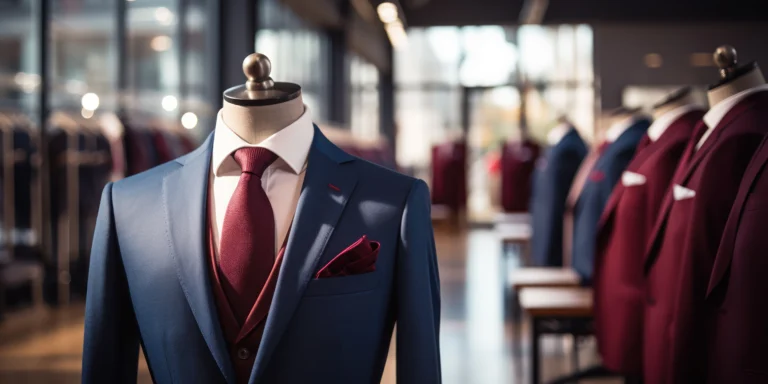
Peak lapels work well for boardroom suits, weddings, galas, formal business events, and any occasion where you want to stand out. They are traditional on double-breasted suits and are one of the two correct lapel styles for a tuxedo. A peak lapel on a single-breasted business suit is a confident choice that has become much more common in recent years.
Who Should Choose a Peak Lapel
Peak lapels are especially flattering for shorter men and men with narrower shoulders, because the upward angle creates height and width. Executives, grooms, and anyone who wants a commanding look also tend to favor them. For a formal wedding wardrobe, see our wedding suits options.
Pros and Cons
The peak lapel looks formal, powerful, and sharp, and it adds visual structure to the upper body. The trade-off is that it can feel too formal for casual blazers or relaxed workplaces, and a very wide peak can overpower a slim frame.
The Shawl Lapel
What Is a Shawl Lapel?
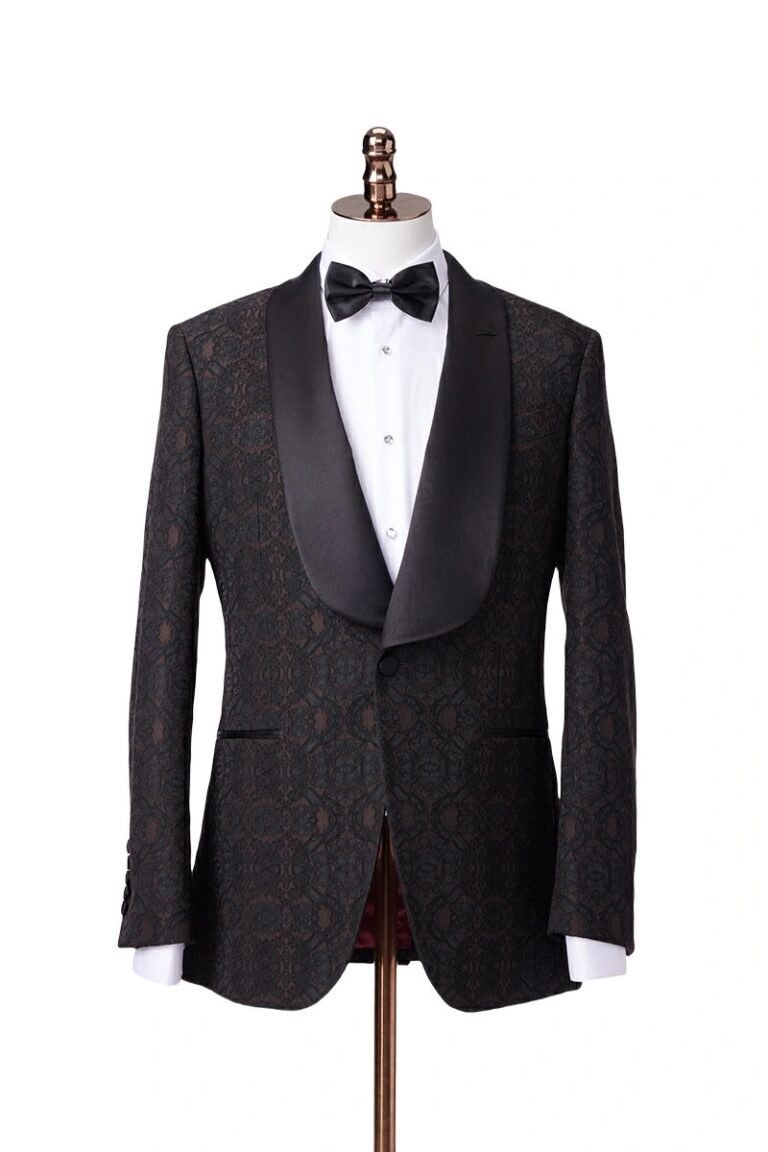
A shawl lapel, also called a shawl collar, is a single smooth, rounded curve that runs from the back of the neck down to the button with no notch or peak. It developed from the Victorian smoking jacket, a relaxed evening garment, and later became a signature of the dinner jacket.
When to Wear a Shawl Lapel
The shawl lapel belongs almost exclusively to evening and formal wear. It is classic on tuxedos, white dinner jackets, and velvet smoking jackets for holiday parties and black tie events. It is generally not worn on business suits, where it would look out of place. According to etiquette authorities such as the Emily Post Institute, black tie calls for a dinner jacket with satin or grosgrain facings, and the shawl lapel is one of the accepted styles.
Who Should Choose a Shawl Lapel
Shawl lapels are softer and more elegant than peaks. They suit men who want a refined, classic black tie look, and the rounded line can soften an angular face or a very broad frame. Explore our custom tuxedos to see shawl and peak options for formal events.
Pros and Cons
The shawl lapel is elegant, timeless, and instantly recognizable as formal wear. The trade-off is limited versatility, since it is essentially reserved for evening events.
Notch vs Peak vs Shawl: Side by Side Comparison
| Feature | Notch Lapel | Peak Lapel | Shawl Lapel |
|---|---|---|---|
| Shape | V-shaped notch at the gorge | Points angle up toward shoulders | Smooth continuous curve |
| Formality | Business and casual | Formal and business formal | Black tie and evening |
| Best jackets | Single-breasted suits, blazers, sport coats | Double-breasted suits, tuxedos, formal suits | Tuxedos, dinner jackets, smoking jackets |
| Best occasions | Office, interviews, everyday wear | Weddings, galas, boardroom, events | Black tie, holiday parties, formal dinners |
| Visual effect | Balanced and neutral | Broadens shoulders, adds height | Soft, elegant, elongating |
| Versatility | Highest | Medium | Lowest |
How to Choose the Right Lapel Style
Choose by Occasion
For daily office wear, interviews, and client meetings, choose a notch lapel. For weddings, formal business events, and statement suits, choose a peak lapel. For black tie and evening events, choose a peak or shawl lapel on a tuxedo, ideally with satin or grosgrain facing.
Choose by Jacket Style
Single-breasted jackets can take any of the three lapels, though notch is most common. Double-breasted jackets should almost always have peak lapels, as a notch lapel on a double-breasted jacket looks unbalanced to most tailors. Tuxedos traditionally use peak or shawl lapels, and a notch lapel tuxedo is considered less formal.
Choose by Body Type
Shorter men and men with narrower shoulders benefit from peak lapels, which add height and width. Taller, slimmer men can wear any style, and a medium-width notch keeps proportions balanced. Broader or heavier builds look best with medium to slightly wider lapels, and a shawl or notch avoids adding extra bulk at the chest. Men with round faces often look sharper in peak lapels, while men with angular faces can soften their look with a shawl.
Lapel Width: How Wide Should Your Lapels Be?
Lapel width matters as much as lapel style. A classic, timeless width is around 3 to 3.5 inches at the widest point. Slim lapels of about 2 to 2.75 inches look modern and fashion-forward but can date quickly. Wide lapels of 3.75 inches or more have a bold, vintage feel and work best on larger frames and double-breasted jackets.
The best rule is proportion. Your lapel width should roughly match your shoulder width and chest size, and your tie should be about the same width as your lapel at its widest point. When your lapels, tie, and shirt collar are in proportion, the whole outfit looks intentional. Pair your suit with custom dress shirts so your collar spread and lapel width work together.
Other Lapel Details Worth Knowing
Gorge Height
The gorge is the seam where the collar meets the lapel. A higher gorge makes the chest look longer and the wearer taller, which is the modern standard. A lower gorge has a relaxed, traditional feel.
Lapel Buttonhole
A functional or decorative buttonhole on the left lapel, called a boutonnière, is a mark of quality tailoring. It is used for flowers at weddings and lapel pins at business events.
Lapel Roll
On a well-made jacket, the lapel rolls gently from the chest rather than lying flat and pressed. This soft roll comes from canvas construction and is one of the clearest signs of a quality custom suit.
Lapel Facings on Tuxedos
Tuxedo lapels are faced with satin or grosgrain silk. Satin is shiny and glamorous, while grosgrain has a fine ribbed texture and a more understated look.
Lapel Style Mistakes to Avoid
Avoid shawl lapels on business suits, since they belong to evening wear. Avoid notch lapels on double-breasted jackets, which rarely look balanced. Avoid lapels that are much wider or narrower than your shoulders, because they distort your proportions. Avoid ties that are much skinnier or wider than your lapels. Finally, avoid chasing trends with extreme slim lapels if you want your suit to look current for many years.
Designing Your Lapels with Executive Custom
The advantage of a custom suit is that you are not limited to whatever lapel a brand decided on for a season. At Executive Custom, your clothier helps you choose the lapel style, width, gorge height, and buttonhole details that suit your build, your profession, and the occasions you dress for. Each choice is fitted to your measurements, so the lapels roll and sit correctly on your body.
Whether you need a versatile notch lapel suit for the office, a peak lapel suit for your wedding, or a shawl collar tuxedo for black tie season, book a consultation to start designing a jacket that is truly yours.
Frequently Asked Questions About Suit Lapel Styles
What is the most versatile suit lapel?
The notch lapel is the most versatile. It works for business suits, blazers, sport coats, and most daytime events, which makes it the best choice for a first suit.
What is the difference between a notch and a peak lapel?
A notch lapel has a V-shaped cut where the collar meets the lapel, while a peak lapel has edges that point upward toward the shoulders. Peak lapels are more formal and make the shoulders look broader.
Are peak lapels too formal for work?
No. Peak lapels are increasingly common on business suits and look confident in the boardroom. In very casual workplaces, a notch lapel may feel more natural.
Can you wear a shawl lapel to the office?
Generally no. The shawl lapel is reserved for tuxedos, dinner jackets, and evening wear, so it looks out of place on a business suit.
Which lapel is best for a tuxedo?
Peak and shawl lapels are the traditional choices for tuxedos. A notch lapel tuxedo is acceptable but considered less formal.
How wide should suit lapels be?
A classic lapel width is about 3 to 3.5 inches. Slim lapels are around 2 to 2.75 inches, and wide lapels are 3.75 inches or more. The right width depends on your shoulder and chest size.
Should my tie match my lapel width?
Yes. Your tie should be roughly the same width as your lapel at its widest point to keep your outfit proportional.
Which lapel style makes you look taller?
The peak lapel makes you look taller and broader because its upward points draw the eye toward the shoulders. A higher gorge adds to this effect.