25 Expert-Backed Tips for Buying Your First Custom Suit
Buying your first custom suit is one of the most rewarding investments you’ll ever make in your wardrobe and one of the easiest to get wrong.
Unlike grabbing something off a rack, a custom suit demands decisions: fabric choice, lapel width, button stance, lining, vents, trouser break. For first-timers, this can feel overwhelming before a single stitch is sewn.
That’s exactly why we created this guide. At Executive Custom, we’ve helped hundreds of first-time buyers navigate the process and walk away with a suit they’ll wear proudly for a decade. These 25 expert-backed tips distill everything we’ve learned from the fitting room floor to the finishing table.
Part 1: Before You Visit the Tailor
1. Define Why You’re Buying the Suit First
Before choosing fabric or silhouette, get clear on the purpose. Is this for boardroom meetings five days a week? A wedding? A once-a-year gala? The occasion defines everything — fabric weight, color, formality level, and whether a two-piece or three-piece makes more sense. A workhorse office suit and a wedding suit have almost nothing in common in terms of construction.
2. Set a Realistic Budget — and Stick to It
Custom suits span a wide price range, from entry-level made-to-measure starting around $500 to bespoke pieces exceeding $5,000. Know your number before you walk in. A good tailor will work with your budget honestly and tell you what’s achievable at each price point. Don’t let upsell pressure take you somewhere uncomfortable your first custom suit should feel like an investment, not a regret.
3. Research Before You Arrive
Walk in with some homework done. Browse suit images online and save photos of cuts, lapels, and colors that appeal to you. This gives your tailor something concrete to work from. You don’t need to know every term — that’s what the expert is for but having visual references dramatically shortens the conversation and reduces misunderstandings.
4. Understand the Difference Between Made-to-Measure and Bespoke
Made-to-measure suits use existing patterns adjusted to your measurements. Bespoke suits are constructed entirely from scratch to your unique proportions, typically requiring three or more fittings. For your first custom suit, made-to-measure is usually the smarter starting point — it offers a superior fit over off-the-rack at a more accessible price, and you’ll learn your preferences before committing to a fully bespoke process.
5. Build Your Timeline Early
Good tailoring takes time. Plan to start the process at least 8–10 weeks before you need the suit, especially if multiple fittings are involved. Rushing a tailor rarely ends well. Quality construction cannot be accelerated without compromising something the fit, the finishing, or both.
Part 2: Choosing the Right Tailor
6. Look at How Your Tailor Dresses
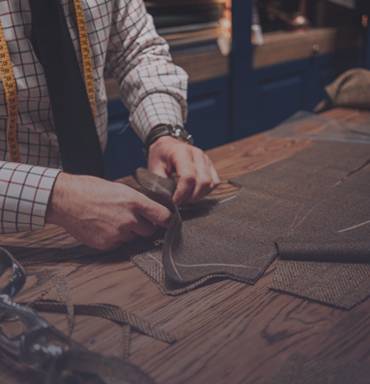
This sounds simple, but it’s telling. A tailor whose own clothing fits poorly or looks mismatched is a red flag. Fit, color coordination, and style sensibility are integral to great suit-making — not just technical sewing skills. The best tailors dress the part.
7. Ask About Their Manufacturing Process
Be specific: Is the suit made on-site? Overseas? Who cuts the pattern? Some shops market themselves as custom tailors but outsource production in ways that undermine quality and personalization. A reputable tailor is transparent about their process and proud to explain it.
8. Prioritize Tailors Who Keep Your Pattern on File
A tailor who retains your paper or digital pattern after your first suit makes every future order easier and more precise. Over time, your pattern gets refined with each fitting and alteration, becoming an increasingly accurate template for your body. This ongoing relationship is one of the greatest advantages of going custom.
9. Listen to Your Tailor — But Ask Questions
Experienced tailors have strong opinions, and most of those opinions are right. Listen with an open mind, especially on fit and fabric. At the same time, don’t be passive. Ask why they’re recommending something. Understanding the reasoning behind each decision helps you make better choices on future suits.
Part 3: Fabric Selection
10. Fabric is the Most Important Decision You’ll Make
The garment is only as good as what it’s made from. Fabric affects how your suit looks, feels, performs over time, and survives repeated wear. Choose the highest quality fabric your budget allows — and note that this doesn’t mean the highest thread count. Super 150s and above are ultra-fine but often less durable for everyday wear.
11. Wool is the Default for a Reason
For your first custom suit, 100% wool is the gold standard. It’s breathable, wrinkle-resistant, drapes beautifully, and works across seasons and occasions. Avoid synthetic blends where possible — they’re often a sign that corners are being cut elsewhere in the construction, and they rarely perform or age as well as natural fibers.
12. Match Your Fabric to the Climate and Season
A 10–11 oz. mid-weight wool works well year-round in most climates. For hot summers, consider lighter fabrics like tropical wool, linen, or cotton blends. For colder months, a heavier flannel or tweed adds warmth and texture. If you’re buying one suit to cover multiple seasons, mid-weight wool is your best friend.
13. Beware of Counterfeit Fabric Claims
Unfortunately, misrepresentation happens in the custom tailoring industry. “Italian fabric” doesn’t always mean what it implies. Ask your tailor to show you the fabric selvage, which typically carries the mill name and fabric specifications. Reputable mills — Loro Piana, Scabal, Dormeuil, Holland & Sherry — are easy to verify.
Part 4: Color and Pattern
14. Start With a Classic Color — Always
For your first custom suit, resist the temptation to go bold. Navy, charcoal, and medium grey are the holy trinity of versatile suit colors. They work across offices, weddings, interviews, and dinner events. They’re easy to accessorize. And unlike trends, they never expire.
15. Save the Bold Patterns for Later
A statement suit — strong pinstripes, bold windowpanes, rich burgundy — sounds exciting until you realize you can only wear it once or twice a month before it starts to feel repetitive. Once you have two or three solid-color suits anchoring your wardrobe, patterns and personality pieces make much more sense as additions.
16. Consider How the Color Works With Your Skin Tone
Navy flatters almost universally. Charcoal and grey tend to work better on medium to deeper skin tones. Lighter greys and tans photograph beautifully on fair complexions. If you’re unsure, your tailor can hold different fabric swatches against you under good lighting — a reliable, low-tech approach that works every time.
Part 5: Fit and Construction
17. Fit Is Non-Negotiable — and Shoulders Are Sacred
No detail of a suit matters more than fit, and no part of fit is more critical than the shoulders. Never buy or commission a suit where the shoulder seam doesn’t sit exactly at the edge of your shoulder. Adjusting shoulders is the most expensive and structurally complex alteration in tailoring. Get them right from the start.
18. Know Your Body Type and How It Affects the Cut
Tall and lean frames benefit from classic cuts with a bit more fabric flow. Athletic and muscular builds often need suppression at the waist and extra room across the chest and back. Shorter men benefit from a slightly higher button stance and minimal trouser break to create the illusion of length. A skilled tailor factors all of this in — that’s precisely the value of going custom.
19. Get Measured Properly — All of Them
A proper custom suit measurement session takes upwards of 50 individual measurements: chest, seat, waist, inseam, sleeve length, shoulder width, back length, and more. Any shop that takes five measurements and calls it custom is cutting corners. Be patient through this process — the accuracy of your measurements directly determines the quality of your fit.
20. Opt for More Fittings, Not Fewer
If your tailor offers a higher service tier that includes additional fitting appointments, take it for your first suit. Multiple fittings allow the pattern to be refined incrementally, catching issues early when they’re cheap to fix. Once your pattern is dialed in, future suits will require far fewer appointments.
21. Choose a Classic Silhouette Over a Trendy One
Slim lapels and cropped jackets may look sharp in a fashion magazine today, but they can feel dated within two or three years. A bespoke suit is a long-term investment that should look relevant for at least a decade. Classic proportions — moderate lapel width, a natural shoulder, a slight waist suppression — are consistently wearable across cycles.
Part 6: Style Details and Finishing Touches
22. Keep Details Simple on Your First Suit
Lining color, button choice, pick stitching, working buttonholes, ticket pockets — the options are endless. For your first suit, keep these details understated. A clean, navy suit with a subtle lining and classic horn buttons speaks more authority than one loaded with competing details. As your wardrobe grows, experimentation becomes much more enjoyable.
23. Pay Attention to Trouser Break
The break of your trousers — how much fabric touches the top of your shoe is a small detail with a big visual impact. A full break creates a traditional, relaxed look. A slight or no break reads as more modern and cleaner in silhouette. Neither is wrong, but discuss it with your tailor based on how you’ll wear the suit and your personal aesthetic.
24. Don’t Overlook the Shirt and Shoe Relationship
Your suit doesn’t exist in isolation. The classic foundational shoe for a suit is a black or dark brown Oxford — clean, closed-laced, and appropriately formal. Your dress shirt collar should complement your face shape (spread collars work with rounder faces; point collars suit more angular features). Your suit is the canvas; these elements are the brushstrokes that complete the picture.
Part 7: Care and Longevity
25. Invest in How You Care for the Suit
A custom suit that is properly cared for lasts 10 years or more. Dry clean sparingly — no more than once or twice per season unless there’s a spill. Brush the fabric after each wear to remove dust and debris. Store it in a breathable garment bag on a wide, sturdy hanger that supports the shoulders. Steam wrinkles out rather than pressing them, which can flatten the fabric’s natural texture. Treat the suit with the same care that went into making it, and it will reward you accordingly.
Frequently Asked Questions
How much should I spend on my first custom suit? A well-made entry-level made-to-measure suit typically starts around $500–$800. Quality custom suits in the $1,000–$2,500 range represent the sweet spot for most first-time buyers — durable construction, quality fabric, and proper fit without overcorrecting on budget.
How long does it take to make a custom suit? Most made-to-measure suits take 4–6 weeks. Bespoke suits with multiple fittings can take 10–16 weeks. Start the process well before your target date.
What’s the difference between bespoke and made-to-measure? Made-to-measure adjusts a base pattern to your measurements. Bespoke creates a completely unique pattern built from scratch to your exact body. Bespoke suits offer the highest level of personalization and fit, but come at a premium price and longer turnaround time.
How do I know if my custom suit fits correctly? The jacket shoulder seam should sit at the edge of your shoulder — not inside or overhanging. The collar should lie flat against your shirt. You should be able to fit a fist between the jacket and your chest when buttoned. Sleeves should show about a half-inch of shirt cuff. Trousers should sit at your natural waist without pulling.
Can I wear a custom suit for multiple occasions? Absolutely — that’s one of the greatest arguments for going custom. A well-chosen navy or charcoal suit can rotate from office meetings to weddings to formal dinners with minimal changes in accessories.
Final Thoughts
Your first custom suit is the beginning of a relationship — with a tailor, with quality, and with the way you present yourself to the world. When done right, it’s not just a garment; it’s a standard that raises everything else in your wardrobe.
At Executive Custom, we guide every client through this process with transparency, expertise, and genuine investment in your result. Whether you’re commissioning a boardroom staple or a once-in-a-decade statement piece, these 25 tips will ensure you walk in prepared and walk out proud.
Ready to start? Book your consultation with Executive Custom today and experience what a suit built exactly for you feels like.