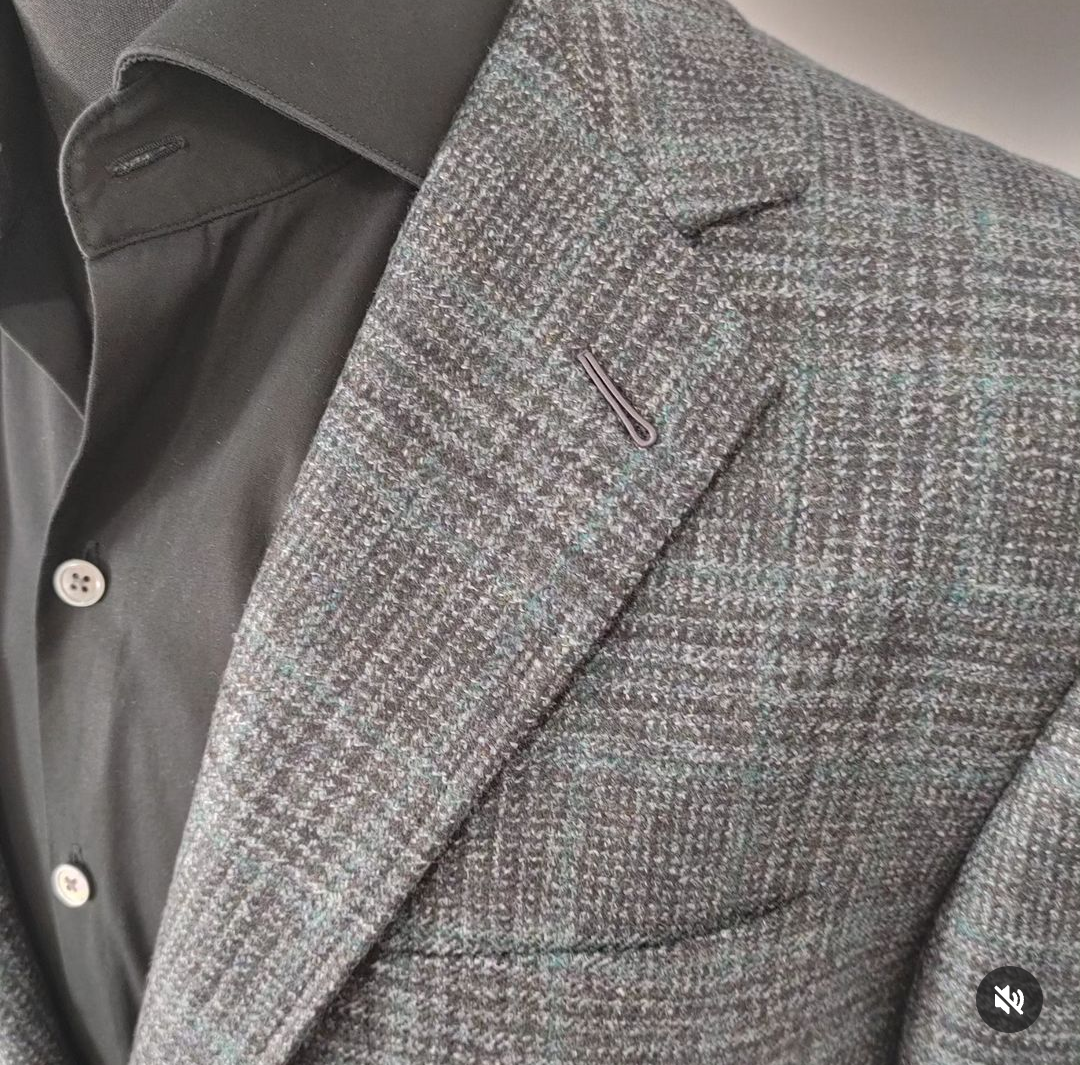
Men’s Custom Overcoats: Wool, Cashmere and Topcoat Styles
A custom overcoat is a made-to-measure outer layer cut from heavyweight wool or cashmere, built to be worn over a suit jacket without crushing its shoulders or sleeves. It differs from an off-the-rack coat in three ways: the shoulder is drafted to your slope, the sleeve is cut to cover your shirt cuff, and the body is scaled to fit over tailoring rather than over a shirt.
Most men buy a coat that fits their body. That’s the mistake. An overcoat has to fit your body plus a suit jacket, plus sometimes a knit layer underneath. Off-the-rack manufacturers solve this by adding generic volume everywhere, which is why so many coats look like they’re wearing the man.
Below how wool and cashmere actually differ, what separates a topcoat from an overcoat, the seven classic silhouettes worth commissioning, and how the made-to-measure process works at Executive Custom.
Key Takeaways
- Overcoat vs topcoat comes down to cloth weight. Traditionally a topcoat uses cloth of roughly 18 oz per yard or less; an overcoat uses heavier cloth and runs longer.
- Cashmere is finer and warmer by weight; wool is tougher. Cashmere fibers measure roughly 14–19 microns against merino’s 17–24, and carry a higher warmth-to-weight ratio — but wool resists abrasion and pilling far better.
- A wool-cashmere blend is the practical default. Blends around 10–20% cashmere give you most of the hand feel at a fraction of the cost and a fraction of the fragility.
- Weight should match your climate, not your budget. Roughly 15–18 oz for a transitional topcoat, 20–24 oz for a standard winter overcoat, 26–32 oz for genuine cold.
- Fit checkpoints that matter: shoulder extends past your natural shoulder, sleeve covers the shirt cuff, coat closes cleanly over a two-button jacket.
What Is a Custom Overcoat?
A custom overcoat is an outer coat drafted to an individual’s measurements rather than to a standard size chart. The tailor takes measurements over a suit jacket — not over a shirt — so the finished coat layers correctly. Length, lapel style, closure, pocket type, lining, and cloth weight are all specified by the client.
The distinction matters because outerwear is the hardest category to buy off the rack. A suit jacket sits on your body. A coat sits on your suit jacket, which means every fit error underneath gets amplified on top.
Topcoat vs Overcoat: What’s the Actual Difference?
A topcoat is a lighter, shorter coat cut from cloth around 18 oz per yard or less, usually ending at or just above the knee. An overcoat is heavier and longer, typically falling below the knee to mid-calf, cut from dense cloth like melton or heavy cashmere. Retailers use the terms interchangeably. Tailors don’t.
| Features | Topcoat | Overcoat |
|---|---|---|
| Cloth weight | ~13–18 oz/yd | ~20–32 oz/yd |
| Length | At or just above the knee | Below the knee to mid-calf |
| Season | Autumn, spring, mild winter | Deep winter |
| Layering room | Over a suit | Over a suit plus knitwear |
| Formality | Business and smart casual | Business and formal, including over black tie |
| Best for | Commuters, mild climates, car-based days | Cold climates, long outdoor exposure |
| Typical cloth | Covert, gabardine, light flannel, fine cashmere | Melton, heavy twill, doeskin, cashmere blend |
The honest recommendation: if you’re commissioning your first coat and you live somewhere with a real winter, build the overcoat. If your coat spends most of its life between an office door and a car door, build the topcoat you’ll actually wear it more.
Wool vs Cashmere for a Custom Overcoat
Cashmere is warmer per ounce and softer to the touch; wool is more durable and holds a crisp silhouette longer. Neither is objectively better. They fail in different directions.
Cashmere fibers typically measure 14–19 microns in diameter, compared with roughly 17–24 microns for merino wool. That fineness is what produces the hand feel and also what makes cashmere more prone to pilling and abrasion. Cashmere’s warmth-to-weight advantage over standard sheep’s wool is substantial, which is why cashmere coats are usually specified in lighter weights than their wool equivalents.
| Criterion | 100% Wool | Wool-Cashmere Blend | 100% Cashmere |
|---|---|---|---|
| Warmth per ounce | Good | Very good | Excellent |
| Durability | Excellent | Very good | Fair |
| Pilling resistance | Excellent | Good | Fair |
| Structure / drape | Crisp, holds shape | Balanced | Soft, fluid drape |
| Water resistance | Best (dense melton sheds well) | Good | Fair |
| Relative cost | Baseline | Moderate premium | Significant premium |
| Best suited to | Daily commuting, harsh weather, first coat | Most men, most climates | Formal wear, second or third coat |
Where each one belongs:
- Choose 100% wool for your first coat, for daily commuting, and for any coat that will meet snow, rain, and shoulder bags on a regular basis. Melton — heavily fulled and brushed — is close to weatherproof by construction alone.
- Choose a wool-cashmere blend if you want the softer hand without the fragility. A blend in the 10–20% cashmere range is the sweet spot most experienced clients settle on.
- Choose 100% cashmere for a dress coat: the coat you wear over a suit to dinner, over a tuxedo to a black-tie event, or in a climate where you’re outdoors briefly rather than for hours.
A note on cost: cashmere is expensive because yield is low. A single goat produces only a few ounces of usable fiber per year, and the fiber must be dehaired by hand or by specialized machinery. Price reflects scarcity, not markup.
Choosing Cloth Weight by Climate
| Cloth weight | Coat type | Suited to |
|---|---|---|
| 13–15 oz | Light topcoat | Mild winters, transitional wear, layering over knitwear |
| 16–18 oz | Standard topcoat | Autumn and spring, mild city winters, car-based commutes |
| 20–24 oz | Standard overcoat | Northeast US winters, walking commutes, most cold-weather use |
| 26–32 oz | Heavy overcoat / greatcoat | Sustained outdoor exposure, wind, deep cold |
Two adjustments worth knowing:
- Cashmere runs warm. A 20 oz cashmere coat wears warmer than a 20 oz wool coat. Specify cashmere a weight class lighter than you would wool.
- A heavier coat lasts longer. Denser cloth resists abrasion, holds its shape through more seasons, and drapes better as it ages.
7 Classic Overcoat Styles Worth Commissioning
| Style | Silhouette | Formality | Commission it if |
|---|---|---|---|
| Chesterfield | Single or double-breasted, knee-length, often a velvet collar, fly front | Highest | You want one coat that works over a suit and a tuxedo |
| Polo Coat | Double-breasted, 6×2 buttons, patch pockets, half-belt, camel cloth | Smart casual to business | You want warmth with visible character |
| Crombie-style / Covert | Slim, single-breasted, above the knee, fly front | Business | You commute daily and want minimal bulk |
| Balmacaan | Raglan sleeve, full cut, Prussian collar, roomy | Casual to business casual | You have broad or sloped shoulders, or want easy layering |
| Ulster | Double-breasted, wide notched lapels, belted back, long | Business | You want maximum weather protection and presence |
| Guards / British Warm | Double-breasted, military detailing, epaulettes, mid-thigh | Business | You want structure and a strong shoulder line |
| Car Coat | Straight, hip to mid-thigh, minimal detail | Casual | You drive, and full-length coats bunch when seated |
If you’re only commissioning one: a single-breasted Chesterfield in charcoal or navy, knee-length, in a 20–22 oz wool or wool-cashmere blend. It carries a suit, a tuxedo, and a sweater equally well.
Colour order for a growing wardrobe: charcoal first, then navy, then camel or mid-grey. Black is more limited than most men expect — it reads formal and pairs poorly with brown shoes and most odd jackets.
How Executive Custom Builds a Made-to-Measure Overcoat
Executive Custom is a New York–based custom clothier offering an at-your-door concierge fitting service, with house cloths alongside books from Italian mills including Loro Piana and Zegna. The company draws on nearly 25 years of tailoring and alteration experience and takes over 25 body measurements per client.
- Consultation. Your climate, commute, existing wardrobe, and the coat’s intended role. This determines weight and length before anything else.
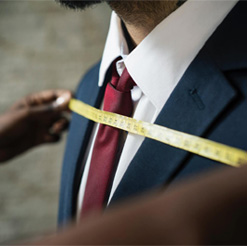
- Measurement over tailoring. Measurements are taken over a suit jacket so the coat is drafted with correct layering allowance — the single most common failure point in ready-to-wear outerwear.
- Cloth selection. House cloths, plus Loro Piana and Zegna books. Weight is matched to climate; fibre content to how the coat will be used.
- Design specification. Lapel style, single or double breast, fly front or exposed buttons, pocket type, vent, lining, and monogram.
- Fitting and refinement. A fitting session to correct balance, sleeve pitch, and length before the coat is finalized.
Concierge fitting. Measurements and fittings are conducted at your home or office across New York City and Long Island, including Manhattan, Hewlett, and Sea Cliff.
How to Judge the Fit of an Overcoat
Six checkpoints, in order of importance:
- Shoulder. The coat’s shoulder seam should sit slightly beyond your natural shoulder — enough to clear a suit jacket underneath without collapsing.
- Sleeve length. The coat sleeve must fully cover your jacket sleeve and shirt cuff, with a little extra so your wrists stay covered when you wear gloves.
- Chest and closure. The coat should button cleanly over a two-button suit jacket with no strain at the closure and no gaping at the lapel.
- Collar. It should sit flat against the back of your jacket collar with no gap. A standing gap here means the balance is wrong, not that the coat needs breaking in.
- Length. Below the knee for an overcoat, at or above the knee for a topcoat. Longer lengths flatter most builds, including heavier ones.
- Back. No pull lines across the shoulder blades when you reach forward. If it pulls in the fitting room, it will pull every day.
Caring for a Wool or Cashmere Overcoat
- Brush after wear. A soft garment brush lifts dust and grit out of the nap. Grit is what abrades fibres over time.
- Use a broad, contoured hanger. Wire hangers deform the shoulder — the one part of a coat that cannot be repaired invisibly.
- Dry clean sparingly. Once or twice per season is sufficient. Over-cleaning strips natural lanolin and shortens the coat’s life.
- Air it before storing. Hang the coat in open air for a day before it goes into off-season storage.
- Store with cedar, not plastic. Breathable garment bags only; plastic traps moisture against the cloth.
- Address pilling early. A cashmere comb on a blend coat, used at the first sign of pilling, prevents it from setting in.
Frequently Asked Questions
What is the difference between a topcoat and an overcoat?
Cloth weight and length. A topcoat traditionally uses cloth of about 18 oz per yard or less and ends at or above the knee. An overcoat uses heavier cloth commonly 20 oz and up and falls below the knee. Topcoats suit transitional seasons; overcoats suit deep winter.
Is cashmere or wool better for an overcoat?
It depends on use. Cashmere is finer (14–19 microns versus 17–24 for merino) and warmer per ounce, making it ideal for dress coats. Wool is more durable and weather-resistant, making it better for daily commuting. A wool-cashmere blend balances both.
What weight wool should a winter overcoat be?
For most cold-climate winters, 20–24 oz per yard is the practical range. Choose 26–32 oz for sustained outdoor exposure or severe cold, and 15–18 oz for a transitional topcoat. Specify cashmere one weight class lighter than wool, since it insulates more per ounce.
Can you wear an overcoat over a tuxedo?
Yes. A single-breasted Chesterfield in charcoal or black — ideally with a velvet collar and a fly front that conceals the buttons — is the traditional choice for black tie. Ensure it’s cut long enough to cover the dinner jacket completely.
How long should a men’s overcoat be?
An overcoat should fall below the knee, anywhere from just below the kneecap to mid-calf. A topcoat sits at or just above the knee. Longer lengths are generally more flattering across body types and provide better coverage when seated or walking.
Is a custom overcoat worth the cost?
For most men, yes — outerwear is the hardest category to fit off the rack because it must layer over tailoring. A custom coat corrects shoulder slope, sleeve length, and layering room, and a well-made wool coat commonly lasts 10 years or more with proper care.
Does Executive Custom offer overcoat fittings outside a store?
Yes. Executive Custom operates an at-your-door concierge service, conducting measurements and fittings at clients’ homes and offices across New York City and Long Island, including Manhattan, Hewlett, and Sea Cliff.
Book a Custom Overcoat Fitting
Executive Custom builds made-to-measure overcoats and topcoats from over 25 body measurements, using house cloths and Italian mill books including Loro Piana and Zegna — fitted at your home or office across New York City and Long Island.